
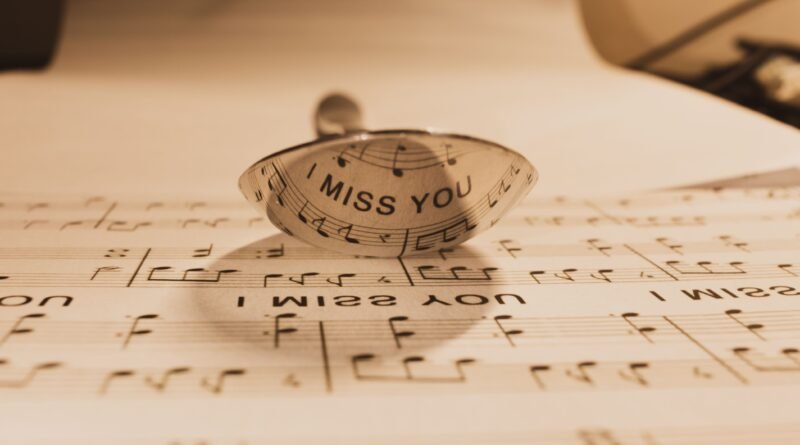
Why Some Songs Feel Like Time Machines?
Have you ever heard a song from years ago and suddenly felt like you were living that moment all over again? One familiar melody can bring back the face of an old friend, the feeling of a first love, a childhood bedroom, a long-forgotten road trip, or a summer you thought you had completely forgotten. This powerful connection between music and memory explains why some songs feel less like entertainment and more like time machines.
But why do songs trigger memories so strongly? Why can a few seconds of music bring back emotions and experiences that ordinary reminders cannot? The answer lies in the unique relationship between music, the brain, emotion, and autobiographical memory.
Songs often become attached to important moments in our lives. We hear certain tracks during our teenage years, first relationships, college days, family celebrations, difficult breakups, or periods of personal change. Over time, those songs become emotional markers for those experiences. When we hear them again years later, our brains can reconnect the sound with the memories and feelings associated with it.
This is also why music can make us nostalgic. A song does not simply remind us of something that happened in the past—it can make the past feel surprisingly close. For a few minutes, an old song can transport us emotionally to another place, another relationship, or even another version of ourselves.
In this article, we’ll explore why music brings back memories, why certain songs feel more nostalgic than others, how songs become emotional time capsules, and why the music of our youth can remain powerful decades later. Most importantly, we’ll discover why a song can stay exactly the same while the person listening to it changes completely.
Related Story
Why We Sometimes Laugh When We Are Nervous?
Music and Memory: A Powerful Connection
Our memories are not stored like neatly organized files in a computer. They are connected to emotions, places, people, sensations, and other experiences.
Music can become part of that network.
When you repeatedly hear a particular song during an important period of your life, the music can become associated with the people, places, emotions, and circumstances surrounding that period.
Imagine listening to the same song every evening during your college years.
Perhaps you listened to it while travelling to class, talking with friends, studying late at night, or walking home after meeting someone you loved.
Years later, the song plays again.
Suddenly, memories connected to that period may become easier to access.
The song has become a kind of retrieval cue—a signal that helps your brain locate associated memories.
Related Story
Why We Keep Replaying Old Conversations?
Why Music Can Trigger Emotion So Quickly.
One reason music feels different from many other memory triggers is its close relationship with emotion.
Think about the difference between someone telling you, “You used to live in that neighborhood,” and hearing a song you played constantly while you lived there.
The sentence may make you remember the neighborhood.
The song may make you feel what it was like to be there.
That distinction matters.
Emotional experiences tend to leave strong impressions on memory. Music can become intertwined with those emotional experiences, which means hearing it again may reactivate not only information about the past but also some of the feelings associated with it.
This is why a song can make you unexpectedly happy, nostalgic, sad, peaceful, or even uncomfortable.
You may not consciously understand why.
Your brain may simply recognize the emotional landscape before your conscious mind catches up.
Why the Same Song Can Feel Different Years Later
There is something even more interesting about musical memories.
The song may stay exactly the same, but your relationship with it changes.
Imagine hearing a romantic song at 18.
At that age, you may associate it with excitement, possibility, and your first serious relationship.
At 40, the same song might remind you of someone you lost, a relationship that ended, or a version of yourself that no longer exists.
The melody hasn’t changed.
The lyrics haven’t changed.
But your life has added new meaning to them.
This is one reason nostalgia can feel complicated.
A single song can contain happiness and sadness at the same time.
You might smile because you remember being young while simultaneously feeling a sense of loss because that particular period of your life cannot return.
Songs Can Become “Emotional Time Capsules”
A photograph captures what something looked like.
A song can sometimes capture what something felt like.
That makes music an unusual kind of emotional time capsule.
Consider everything that can become attached to one song:
A place:
The bedroom where you listened to it repeatedly.
A person:
Someone you loved or someone you eventually lost.
A period:
College, your first job, your early twenties, parenthood.
A feeling:
Freedom, loneliness, excitement, uncertainty, hope.
A routine:
A daily commute, evening walks, weekend parties, late-night conversations.
Over time, the song becomes more than music.
It becomes a compressed representation of an entire period of life.
Related Story
Why Your Favourite Smell Can Suddenly Transport You Somewhere?
Why Sad Songs Can Feel Comforting
If music can bring back painful memories, why do people sometimes deliberately listen to sad songs?
Because sadness is not always an unpleasant emotion.
A sad song can provide a sense of recognition.
It can make us feel that someone else understands an emotion we are experiencing. It can also give structure to feelings that are difficult to express through ordinary language.
Sometimes we don’t listen to a sad song because we want to become sad.
We listen because the song understands the sadness for us.
That can be strangely comforting.
Music can provide emotional distance too. Instead of directly confronting a painful memory, we experience it through sound, melody, lyrics, and rhythm.
The experience can feel safer and more manageable.
Your Personal Soundtrack Shapes Your Identity
Our favorite songs can also become part of our personal identity.
Think about the songs you consider “your songs.”
They may represent different versions of you:
The ambitious version.
The rebellious version.
The romantic version.
The lonely version.
The carefree version.
The person you were before responsibilities changed your life.
Music can therefore become part of our autobiographical story.
When we revisit those songs, we are sometimes revisiting our own identity.
That’s why saying, “This song reminds me of who I was,” can be more accurate than saying, “This song reminds me of what happened.”
The Past Isn’t Really Returning
There is one important thing to remember.
When a song takes you back, it isn’t literally transporting you into the past.
Your brain is reconstructing a memory in the present.
Memory is not a perfect recording. Each time we remember something, we reconstruct aspects of it. That means the emotional experience created by a song may feel incredibly vivid while still being influenced by everything that has happened since the original event.
In other words, the song doesn’t bring the past back.
It brings your present-day version of the past into consciousness.
And perhaps that is even more fascinating.
The Next Time an Old Song Finds You
The next time an old song unexpectedly stops you in your tracks, don’t dismiss it as simply nostalgia.
Pay attention.
What did it remind you of?
Who were you when you first heard it?
Who was around you?
What did you believe about your future?
What did you hope would happen?
And perhaps most importantly:
What does that song mean to you now?
Because songs can do something photographs, diaries, and conversations sometimes cannot.
They can briefly connect the person you were with the person you have become.
A few seconds of melody can open a door to another decade.
The world outside continues moving forward.
But inside your mind, for the length of a song, time can stand still.
Related Story
Why Coffee Tastes Better on Difficult Days?
If you think this information is useful, you can…
Get updates and read additional stories on the Health Orbit Fan Page. & Instagram Page
For Guest posts, sponsored posts and other details, please click the ‘Contact Us’ page.