Simple Free-Hand Exercises for Women: The Secret to a Strong Spine and Slimmer Belly
Discover how bodyweight movements can transform your core, protect your back, and help you achieve a toned midsection—without a single piece of equipment.
Introduction: Why Free-Hand Exercises Are a Game-Changer for Women
Let’s face it—between work, family, and the endless to-do lists, finding time for the gym feels like a luxury most women simply don’t have. And even when you do make it to the gym, the equipment can be intimidating, the crowds overwhelming, and the cost draining.
Here’s the good news: you don’t need any of it.
Free-hand exercises—also known as bodyweight or calisthenics training—use your own body weight as resistance. They’re accessible, effective, and can be done anywhere: your living room, a hotel room, or even your office during a break. But beyond convenience, these exercises offer something far more valuable: a stronger spine and a slimmer belly, two goals that go hand in hand for women’s health.
A strong core acts as the body’s foundation. It helps protect the spine, reduces the risk of injury, and eases everyday tasks. When core strength is neglected, the shoulders round forward, the neck stiffens, and back pain often follows. The connection between core strength and spinal health is so fundamental that experts consider core exercise a cornerstone of both rehabilitation and performance training.
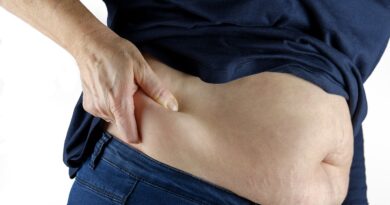
The statistics paint a clear picture: back pain affects approximately 80% of the world’s population at least once in their lifetime, according to the World Health Organization. Meanwhile, abdominal obesity is on the rise, with prevalence reported at 40% in women aged 18 to 30. The good news? Both issues respond remarkably well to consistent, targeted free-hand exercise.
The Science Behind It: What Research Says About Bodyweight Training
You might wonder—can simple exercises without weights really make a difference? The research says yes.
A 2025 case report published in the Journal of Society of Indian Physiotherapists examined the effects of a structured calisthenics program on a sedentary young female with abdominal obesity. After just five weeks of bodyweight training, the participant showed improvements across all measured parameters: reduced body fat percentage, improved waist-hip ratio, enhanced core strength, and increased physical activity capacity. The researchers concluded that calisthenics is an effective method to reduce abdominal fat and improve body composition in sedentary young females.
Another study published in 2024 found that among female officers with non-specific low back pain, core strengthening and hip mobility exercises proved more effective than traditional exercises in alleviating pain and reducing low back instability.
A 2025 study on calisthenics training in young females demonstrated that this form of exercise can effectively improve motor performance, including balance, agility, and core strength, regardless of the participant’s foot posture. A meta-analysis of multiple exercise types found that calisthenics, along with aerobic exercise and HIIT, showed significant effects on reducing BMI compared to control groups.
Perhaps most compelling is a 2026 meta-analysis which concluded that exercise intervention can significantly improve spinal health, with the ideal program being 10–30 minutes per session, 3–4 times a week, for 10–20 weeks. That’s less than two hours a week for life-changing results.
Related Story
Pilates Craze & Low-Impact Fitness: Why Celebrities Are Ditching High-Intensity Workouts
The Core-Spine Connection: Why a Strong Core Protects Your Back
Before we dive into the exercises, let’s understand why core strength matters so much for your spine.
The core is more than just your abdominal muscles. It includes:
- Transverse abdominis (the deepest abdominal layer)
- Rectus abdominis (the “six-pack” muscles)
- Internal and external obliques (side muscles)
- Erector spinae (muscles running along your spine)
- Multifidus (small muscles stabilizing each vertebra)
- Pelvic floor muscles
- Diaphragm
These muscles work together like a natural corset, providing stability to your spine during every movement. When they’re weak, your spine lacks support, leading to poor posture, back pain, and increased injury risk.
The Blueprint for an Effective Free-Hand Workout (No Specific Moves Listed)
Rather than handing you a list of isolated exercises, this section gives you the foundational principles that make any free-hand routine safe, effective, and tailored to your spine and belly goals. Once you understand these rules, you can apply them to virtually any movement you choose—without needing a trainer or a gym.
Cover All Fundamental Movement Patterns
An intelligent free-hand program should include movements that challenge your body in multiple planes of motion. Look for exercises that fall into these categories:
- Hinge patterns – movements where your hips push backward while your spine stays neutral (great for glutes and lower back support).
- Squat patterns – movements that lower your center of gravity while engaging the entire core for balance.
- Anti-extension patterns – moves that resist the tendency of your lower back to arch outward (critical for belly firming).
- Anti-rotation patterns – movements that resist twisting forces, which deeply engage the obliques and spinal stabilizers.
- Pull and push patterns – upper-body actions that open the chest and improve posture, indirectly relieving spinal compression.
Key takeaway: Instead of repeating the same three moves daily, choose one exercise from each category per session. This ensures balanced development and prevents overuse injuries.
Prioritize Time Under Tension Over Repetition Count
Research shows that muscular endurance and hypertrophy respond better to controlled tempo than to frantic speed. For spine health, slow and steady is non-negotiable—rapid jerky movements compress spinal discs and recruit momentum rather than muscle.
- Aim for a 3-second lowering phase, a 1-second pause, and a 2-second lifting phase on every repetition.
- This increases the total time your muscles work (time under tension) without adding external weight, making your bodyweight feel significantly heavier and more effective.
Breathe With Intention
Breathing is not an afterthought—it is a core exercise in itself. The diaphragm is part of your core cylinder, and how you breathe directly affects spinal stability.
- Exhale during the hardest part of the movement (the exertion phase) to engage the transverse abdominis.
- Inhale during the release or return phase to maintain intra-abdominal pressure that protects the lower back.
- Recent 2025 studies confirm that combining core training with specific breathing protocols yields significantly better pain-relief outcomes for chronic low back sufferers than core training alone.
Progress Systematically Without Weights
One of the biggest myths about bodyweight training is that you cannot progressively overload. You absolutely can—just get creative:
- Increase hold times – e.g., extend a static hold from 20 to 45 seconds over several weeks.
- Decrease rest intervals – shorten rest between sets from 60 to 30 seconds to spike metabolic demand (great for belly fat).
- Increase leverage – move your hands or feet farther from your center of gravity to make the same movement harder.
- Add unilateral variations – perform moves with one arm or one leg supported to double the demand on your core stabilizers.
Track your progress weekly. Even adding 2–3 seconds to a hold or one extra controlled repetition per set qualifies as meaningful overload.
Listen to Your Spine – Neutral Is Non-Negotiable
Unlike gym machines that force you into a fixed path, free-hand exercises give you total freedom—and total responsibility. The golden rule: maintain a neutral spine (natural slight curve in your lower back, not flattened and not overly arched) throughout every repetition.
- If you feel pinching, sharp pain, or excessive lower-back arching, you have gone too far in range of motion.
- Scale back the depth or range until the movement feels like pure muscle engagement, not joint stress.
- A 2025 biomechanical review emphasized that spinal loading during poor-form bodyweight exercises can be just as harmful as poor-form weighted lifting—so quality truly trumps quantity.
Related Story
How One Can Lose Weight Without Going To The Gym?
Your Weekly Action Plan (Without a Fixed Routine)
Forget rigid “do this many of that exercise” charts. Instead, adopt this session template that you can fill with any movements you already know or learn gradually:
| Session Component | Duration / Focus | Why It Matters |
|---|---|---|
| Dynamic Warm-up | 3–5 minutes of gentle spinal mobility and hip circles | Increases blood flow to the deep core muscles and prepares the intervertebral discs for load |
| Main Set (choose 4–5 categories) | 3 rounds of 8–15 controlled reps per category (or 20–45 sec holds) | Covers hinge, squat, anti-extension, anti-rotation, and push/pull patterns for balanced spine support |
| Core-Finisher Block | 4–5 minutes of constant tension movements (slow tempos, short rests) | Targets the transverse abdominis and obliques specifically for belly firming |
| Cool-down & Deep Breathing | 5 minutes of diaphragmatic breathing and gentle stretching | Lowers cortisol, aids recovery, and reinforces the mind-muscle connection for your next session |
Progression rule: Each week, add one extra repetition per set or reduce rest by 5 seconds or increase hold time by 3 seconds. Small, consistent bumps yield dramatic 10-week results.
Tips for Maximum Results (Without Getting Lost in the Details)
- Consistency beats intensity: Fitness is not about how intense the workout was—it’s about showing up. A 15-minute session done 4 times a week outperforms a 1-hour session done once.
- Form check yourself: Use a mirror or record a video. Watch for hip height, spinal curve, and shoulder position. Correcting your alignment adds years to your spinal health.
- Pair with protein and fiber: Exercise works best for belly reduction alongside a diet rich in lean protein and vegetables—research confirms that bodyweight training + dietary adjustment amplifies waist-hip ratio improvements.
- Hydrate and sleep: Dehydration reduces disc height and increases back stiffness. Poor sleep elevates cortisol, which promotes abdominal fat storage. These lifestyle factors are non-negotiable partners to your free-hand work.
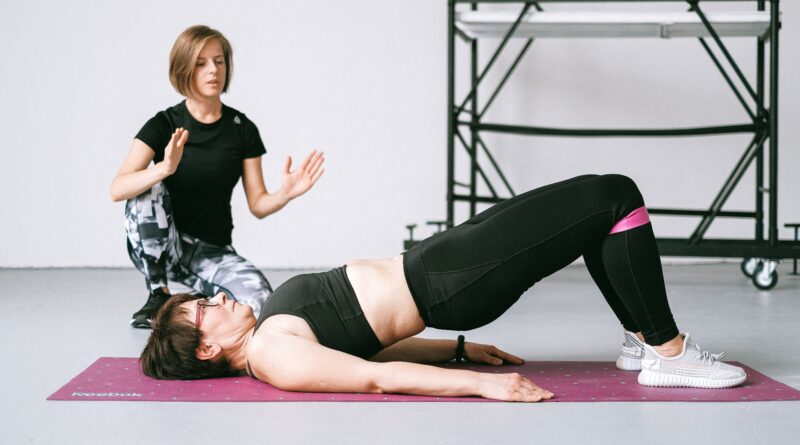
- Modify for your body: If you have knee discomfort, reduce depth. If you have wrist issues, use your forearms. If you are postpartum, start with supine (lying down) positions to safely re-engage the deep core. There is no shame in scaling—it is the smartest path to long-term gain.
The Takeaway: Your Spine and Belly Will Thank You
Free-hand exercises offer a simple, science-backed path to a stronger spine and a slimmer belly. The research is clear: bodyweight training effectively reduces abdominal fat, improves core strength, alleviates back pain, and enhances overall physical function—provided you apply the right principles of movement variety, controlled tempo, breathing, and progressive overload.
The best part? You can start today. No gym membership. No expensive equipment. No complicated choreography to memorize.
Just you, your body, and a commitment to moving with intention. Your spine—and that slimmer belly—are waiting.
Disclaimer
The information provided in this article is for educational and informational purposes only and is not intended as medical advice. Always consult with a qualified healthcare professional before beginning any new exercise program, especially if you have pre-existing health conditions, injuries, or are pregnant or postpartum. Individual results may vary, and exercises should be performed with proper form to avoid injury. The author and publisher disclaim any liability for any adverse effects arising from the use or application of the information contained herein.
If you think this information is useful, you can…
Get updates and read additional stories on the Health Orbit Fan Page.
For Guest posts, sponsored posts and other details, please click the ‘Contact Us’ page.