What Specific Strength Training Exercises Protect Mobility After 45?
The most useful exercises for preserving mobility later in life are functional, full-body movements that strengthen the legs, hips, trunk, upper body, and ankles while also challenging balance. A practical routine should include sit-to-stands, squats, step-ups, hip hinges, calf raises, rows, pushes, carries, and carefully progressed balance or power exercises.
The Key Exercises
| Exercise | Mobility function supported | Beginner version |
| Sit-to-stand | Rising from chairs, toilets, and beds | Use a higher chair and push lightly from the armrests |
| Squat | Bending, lifting, stair climbing | Box squat to a chair |
| Step-up | Climbing stairs and curbs | Use a low step with a handrail |
| Hip hinge or deadlift | Picking objects from the floor safely | Practise with a broomstick or light dumbbells |
| Calf raise | Walking, ankle stability, push-off | Hold a wall or chair |
| Tibialis raise | Foot clearance and reducing trips | Lean against a wall and lift the toes |
| Row | Upright posture, pulling, shoulder function | Resistance-band row |
| Push-up or chest press | Pushing doors, rising from the floor, carrying | Wall push-up |
| Farmer’s carry | Grip, trunk stability, walking confidence | Carry light bags or dumbbells |
| Supported single-leg stand | Balance and weight transfer | Hold a countertop with one hand |
These exercises reflect the movement patterns used in daily life rather than isolating muscles solely for appearance. The CDC recommends that adults aged 65 and older perform muscle-strengthening activity on at least two days each week and include balance activities such as heel-to-toe walking and standing from a chair.
1. Sit-to-stand
Sit-to-stands are among the most important functional exercises for older adults because they directly train the ability to rise from a chair.
How to perform:
- Sit near the front of a firm chair with feet hip-width apart.
- Lean the chest slightly forward while keeping the back controlled.
- Push through the feet and stand tall.
- Slowly lower yourself back to the chair.
Begin with 1–2 sets of 6–12 repetitions. Use the arms for assistance if necessary, but gradually reduce dependence on them. Do not allow the knees to collapse inward.
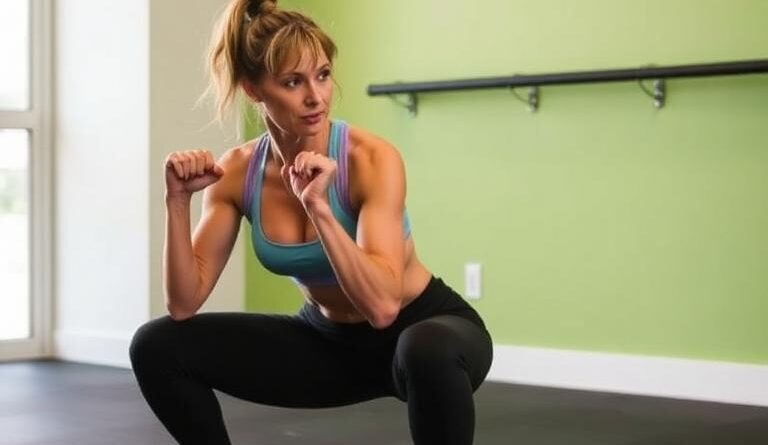
2. Squats
Squats strengthen the quadriceps, gluteal muscles, and trunk. These muscles are essential for stairs, hills, lifting, and getting up from low surfaces.
Start with a chair or box squat. Stand in front of a chair, lower the hips toward it, briefly touch the seat without dropping heavily, and stand again. As strength and control improve, use a lower surface or hold a light weight close to the chest.
The depth should be comfortable. A partial squat performed with good control is more useful than a deep squat that causes pain or loss of balance.
Related Story
Mental Agility After 45: Simple Ways to Keep Your Brain Flexible
3. Step-ups
Step-ups train each leg separately and closely resemble climbing stairs. They also challenge balance and coordination.
Use a low, stable step. Place one foot fully on the step, press through that leg, and bring the other foot up. Step down slowly and repeat on the opposite side. Hold a rail or position yourself near a sturdy support.
Start with 1–2 sets of 5–10 repetitions per leg. Increase the height only when you can perform the movement without pushing excessively from the trailing leg or leaning to one side.
4. Hip Hinges and Deadlifts
Many back injuries occur when people bend from the waist and lift with poor mechanics. Hip-hinge training teaches the safer pattern of moving through the hips while maintaining a stable trunk.
Practise first by standing with your back a short distance from a wall. Push the hips backward until they touch the wall, then return to standing. Progress to holding light dumbbells or a kettlebell.
The movement should come primarily from the hips, not from rounding the lower back. This exercise supports gardening, lifting groceries, picking up objects, and transferring items from the floor.
5. Calf and Tibialis Raises
The calf muscles help propel the body during walking and climbing. Stronger calves also contribute to ankle stability. To perform calf raises, hold a countertop, rise slowly onto the balls of the feet, pause, and lower under control.
For the front of the lower leg, stand with the back against a wall and lift the toes while keeping the heels on the floor. This trains the tibialis anterior, which helps clear the foot during walking.
Begin with 1–2 sets of 10–20 repetitions. If balance is limited, perform the exercises seated before progressing to standing.
Related Story
Healthy Aging: 9 Habits Successful People Follow for a Longer, Healthier Life
6. Rows and Wall Push-Ups
Mobility is not only about the legs. Upper-body strength is important for carrying, pushing doors, using handrails, maintaining posture, and getting up from the floor.
For a resistance-band row, anchor the band securely, pull the elbows backward, and gently draw the shoulder blades together. Avoid shrugging the shoulders.
Wall push-ups are a suitable starting point. Place the hands on a wall at chest height, keep the body straight, bend the elbows, and bring the chest toward the wall. Push back to the starting position. Progress gradually from a wall to a countertop and then to a stable bench if appropriate.
7. Farmer’s Carries
Farmer’s carries involve walking while holding weights at the sides. They train grip strength, posture, trunk stability, and the ability to carry everyday objects.
Begin with light dumbbells, water bottles, or shopping bags. Stand tall, keep the shoulders relaxed, and walk slowly for 20–30 seconds. Turn carefully rather than pivoting suddenly.
This exercise should not cause breath-holding or back discomfort. Use a clear walking path and stop if posture deteriorates.
8. Supported Balance Work
Strength alone does not guarantee mobility. A person also needs to control the body while shifting weight, turning, stepping over obstacles, and standing on one leg.
Useful options include:
- Supported single-leg stands.
- Heel-to-toe walking along a counter.
- Side-stepping with a resistance band.
- Controlled backward stepping.
- Reaching in different directions while standing.
Always perform these near a stable support. Do not practise single-leg balance beside a loose chair or on a slippery floor.
How to Structure The Routine
A simple twice-weekly programme could look like this:
- Sit-to-stand: 2 sets of 8–12 repetitions.
- Step-up: 2 sets of 6–10 repetitions per leg.
- Hip hinge: 2 sets of 8–12 repetitions.
- Calf raise: 2 sets of 12–15 repetitions.
- Band row: 2 sets of 8–15 repetitions.
- Wall push-up: 2 sets of 8–15 repetitions.
- Farmer’s carry: 2–3 walks of 20–30 seconds.
- Supported balance: 2–3 rounds of 10–30 seconds per side.
The American College of Sports Medicine suggests at least two weekly strength-training sessions, with commonly useful ranges of 1–3 sets and approximately 6–15 repetitions, adjusted to ability and exercise choice.
The final repetitions should feel challenging but controlled. A useful progression is to add repetitions first, then slightly increase resistance, movement range, or complexity. Never increase all variables simultaneously.
Related Story
What Are The Best Exercises for Men Over 45 to Naturally Support Healthy Testosterone Levels?
What About Power Exercises?
Power is the ability to produce force quickly. It matters during situations such as catching oneself after a trip, stepping onto a curb, or rising quickly from a chair. ACSM materials describe power training for older adults using carefully selected movements such as rapid medicine-ball throws, controlled push presses, or low-impact hopping, but these require appropriate balance, joint health, and supervision.
For many adults, a safer introduction is simply to stand from a chair at a moderately brisk speed while lowering slowly. More advanced individuals may perform fast but controlled step-ups or medicine-ball chest passes. Jumping and hopping should not be added automatically, particularly in people with osteoporosis, significant arthritis, recent surgery, neuropathy, or a history of falls.
Safety Principles
Start with a medical or physiotherapy assessment if you have chest pain, unexplained breathlessness, dizziness, frequent falls, neurological symptoms, severe joint pain, recent surgery, or a major chronic illness. Stop exercise if you develop chest pressure, faintness, unusual shortness of breath, or sharp pain.
Use stable footwear, keep the training area clear, and prioritise technique over load. Mobility is protected not by choosing the hardest exercise, but by performing appropriate movements consistently and progressing them gradually.
If you think this information is useful, you can…
Get updates and read additional stories on the Health Orbit Fan Page.
For Guest posts, sponsored posts and other details, please click the ‘Contact Us’ page.