
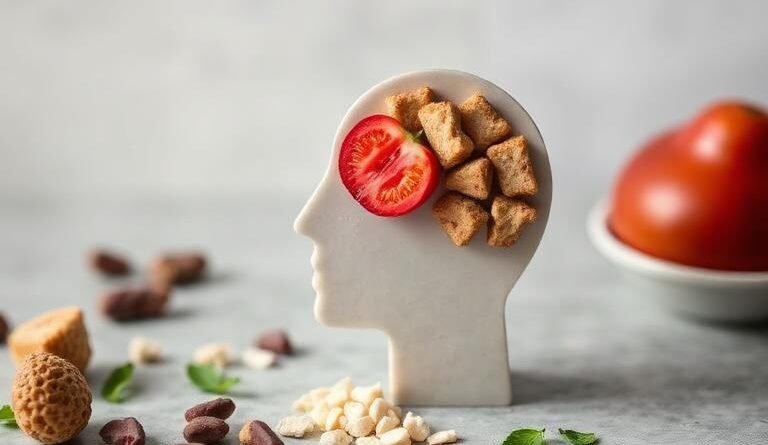
Protein and Mental Health: Is There Really a Connection?
The question sounds simple: Does eating more protein improve mental health?
The honest answer is more interesting than either a confident yes or a dismissive no. Protein is not an antidepressant, and a protein shake cannot substitute for psychotherapy, medication, sleep, social connection, or medical care. Yet protein is biologically entangled with the brain in ways that are both intimate and easy to misunderstand. Its amino acids help build neurotransmitters, enzymes, hormones, immune molecules, and the living architecture of neurons. Protein deficiency can impair physical and psychological functioning; adequate protein supports the body’s capacity to repair itself and maintain a stable internal environment.
But the relationship between protein and mental health is not a simple matter of “more is better.” The source of protein, the rest of the diet, a person’s age and health, digestive function, sleep, physical activity, and existing psychiatric condition all matter. Recent studies suggest that higher total protein intake may be associated with lower depression risk, but the evidence is largely observational and does not prove that protein itself prevents depression. Research on anxiety, mood, and sleep is similarly mixed.
The connection is real—but indirect, conditional, and often hidden within the larger pattern of nutrition.
The Brain’s Protein Economy
The brain is often imagined as a purely electrical organ, a network of impulses and synapses. But beneath these flashes of activity is a vast chemical economy. Neurons must continually manufacture receptors, transporters, enzymes, structural proteins, and signaling molecules. They need amino acids—the smaller units released when dietary proteins are digested—to build and maintain this machinery.
Several amino acids are particularly relevant to brain function:
- Tryptophan contributes to the synthesis of serotonin and melatonin.
- Tyrosine is involved in the production of dopamine and norepinephrine.
- Glutamate is an excitatory neurotransmitter and precursor to GABA.
- Phenylalanine can be converted into tyrosine.
- Methionine participates in methylation reactions important to neurotransmitter and cellular metabolism.
- Branched-chain amino acids influence muscle metabolism and compete with other amino acids for transport into the brain.
This does not mean that eating a food containing tryptophan will automatically raise serotonin in the brain. Biology is not a vending machine. Once amino acids enter the bloodstream, they compete for transport, are used by muscles and other tissues, and are regulated by hormones and metabolic pathways. A high-protein meal may actually reduce the relative proportion of tryptophan available to enter the brain because other large neutral amino acids rise more substantially in the blood.
Carbohydrates complicate the story further. A carbohydrate-rich meal stimulates insulin release, which helps move several competing amino acids into muscle while leaving relatively more tryptophan in circulation. In some circumstances, this may increase the tryptophan-to-competing-amino-acid ratio and influence serotonin synthesis. Thus, the relationship between protein and mood cannot be understood by looking at protein in isolation.
The Essential Distinction
Protein is necessary for the materials from which the brain operates. It is not, by itself, a direct mood-enhancing drug.
A person who is undernourished, losing muscle, recovering from illness, or consuming very little protein may experience weakness, poor concentration, irritability, and diminished resilience. Correcting that nutritional inadequacy may improve well-being. But once basic needs are met, simply adding more protein does not necessarily produce a corresponding improvement in mood.
What The Research Shows
The research landscape contains several different kinds of evidence, and they should not be treated as equivalent.
1. Biological Mechanisms
Mechanistic studies show that amino acids participate in neurotransmitter production, energy metabolism, immune signaling, and the gut–brain axis. These findings make a connection between protein and mental health biologically plausible.
Mechanistic evidence answers the question, “Could this pathway exist?” It does not answer, “Does increasing protein intake improve depression in real people?”
2. Observational Studies
Observational studies compare people who eat different amounts or types of protein and examine their reported mood or rates of depression. A 2026 systematic review and meta-analysis found that people in the highest category of total protein intake had a lower odds of depression than those in the lowest category, with an odds ratio of 0.56 and a 95% confidence interval of 0.34 to 0.92.
This means the highest-intake group had approximately 44% lower odds in the pooled comparison—not that protein reduced depression by 44%, and not that an individual who doubles protein intake will receive the same benefit.
The review did not find statistically significant associations for animal protein or plant protein considered separately. This is important. It suggests that the association may be related to overall nutritional adequacy, broader dietary quality, or other characteristics of people who consume more total protein.
Another 2026 cross-sectional study of 17,125 adults found that women in the highest category of animal-protein intake had a 36% lower likelihood of depression, while no similar association was observed among men. The authors also reported a significant trend among adults aged 65 and older. But the study was cross-sectional: diet and depression were assessed at roughly the same period. It cannot establish whether protein affected mood, whether mood affected food choices, or whether a third factor influenced both.
3. Intervention Studies
Randomized controlled trials offer stronger evidence because participants are assigned to an intervention rather than simply observed. However, trials specifically testing higher protein intake as a treatment for depression or anxiety remain limited.
A 2026 systematic review and meta-analysis found moderate-quality evidence that combinations of physical activity and dietary interventions—including some balanced or high-protein diets—may reduce depression. Yet such studies cannot isolate protein’s contribution from exercise, weight change, improved sleep, social engagement, or overall dietary improvement.
This is one of the central difficulties in nutrition research. A person who begins eating a protein-rich Mediterranean-style diet may also start cooking at home, eat more vegetables, walk more often, sleep better, and drink less alcohol. The resulting improvement cannot easily be attributed to protein alone.
Protein Deficiency And The Vulnerable Brain
The connection between protein and mental health is most convincing when we consider inadequacy rather than supplementation.
Protein deficiency can occur due to poverty, food insecurity, restrictive dieting, illness, gastrointestinal disease, swallowing difficulties, loss of appetite, or a reduced ability to shop and prepare meals. Older adults may be particularly vulnerable. A person may consume enough calories from tea, biscuits, refined grains, or sweetened foods while still receiving insufficient protein and micronutrients.
In such circumstances, the body enters a state of diminished reserve. Muscle mass declines. Immune function may weaken. Wounds heal slowly. Fatigue becomes more pronounced. The brain, dependent on a continuous supply of glucose, oxygen, micronutrients, and amino-acid substrates, may function less effectively.
The psychological manifestations can be subtle:
- Reduced attention and mental stamina.
- Irritability or emotional fragility.
- Apathy and loss of initiative.
- Greater vulnerability to stress.
- Sleep disruption.
- Worsening of existing depression or anxiety.
- Social withdrawal because eating and daily activity become exhausting.
These symptoms are not specific to protein deficiency. They may also arise from anemia, thyroid disease, medication effects, infection, depression itself, or many other conditions. Nutrition should therefore be assessed as one part of a broader clinical picture.
Older Adults
Protein is particularly relevant in later life because aging is accompanied by a gradual loss of muscle mass and reduced appetite in many people. The resulting frailty can limit mobility, independence, and social participation—factors closely tied to mental well-being.
A 2025 review noted that the adult protein RDA remains 0.8 grams per kilogram of body weight per day, while older adults may have higher practical needs depending on health, activity, and muscle status. This figure is a general nutritional reference, not a mental-health prescription.
For a 70-kilogram adult, 0.8 grams per kilogram corresponds to approximately 56 grams of protein per day. The appropriate amount for an individual with kidney disease, liver disease, frailty, intense exercise, or a clinical condition may differ.
Tryptophan, Serotonin, And A Common Misunderstanding
The popular story is familiar: tryptophan is the precursor to serotonin, serotonin influences mood, therefore more protein should mean more serotonin and a happier mind.
The first two steps are broadly correct. The conclusion is too simple.
Tryptophan must cross the blood–brain barrier. It competes with other large neutral amino acids for transport. The quantity that reaches the brain depends not only on how much tryptophan was eaten, but also on the balance of competing amino acids, insulin response, metabolism, inflammation, and the activity of enzymes that divert tryptophan into other pathways.
One such pathway is the kynurenine pathway, which links tryptophan metabolism to immune and inflammatory processes. Under conditions of chronic inflammation or physiological stress, more tryptophan may be directed away from serotonin synthesis. This is one proposed route by which inflammation, infection, metabolic disease, and depression may intersect.
The gut may also influence this system. Microorganisms metabolize nutrients and produce short-chain fatty acids and other compounds that affect immune signaling, intestinal integrity, and communication with the brain. A 2025 review described possible links among dietary protein, gut microbiota, tryptophan metabolism, and depressive symptoms, while emphasizing that the field is still developing.
The gut–brain axis is promising, but it is not a settled explanation. Microbiome studies often differ in their methods, populations, dietary assessments, and definitions of a “healthy” microbial community. One should be wary of confident claims that a particular protein powder or probiotic will “boost serotonin.”
Plant Protein, Animal Protein, And Whole Meal
The question “Which protein is best for mental health?” has no single answer.
Plant Proteins
Beans, lentils, chickpeas, soy, peas, nuts, and seeds provide protein along with fiber, minerals, polyphenols, and other compounds. They are often central to Mediterranean-style and other dietary patterns associated with better cardiometabolic health.
Plant proteins can be lower in one or more essential amino acids when considered individually, but varied diets can readily meet protein requirements. Soy foods, for example, provide a relatively complete amino-acid profile. Legumes paired with grains across the day can also supply complementary amino acids.
Their potential mental-health advantage may lie less in protein alone than in the package:
- More dietary fiber.
- Greater microbial diversity and fermentation substrates.
- Lower reliance on processed meats.
- More magnesium, folate, potassium, and polyphenols.
- Lower saturated-fat intake in many dietary patterns.
Animal Proteins
Fish, eggs, dairy, poultry, and meat can provide highly bioavailable protein and essential amino acids. Fish also supplies omega-3 fatty acids, which have independent relevance to brain and cardiovascular health. Dairy foods provide protein, calcium, and other nutrients.
But “animal protein” is not a single exposure. Fish, yogurt, eggs, poultry, unprocessed red meat, and processed meat differ profoundly in their nutritional profiles and health implications. A diet high in eggs and yogurt is not equivalent to one high in bacon and sausages.
Recent reviews have often found that milk and plant-derived proteins are associated with better dietary patterns, while red and processed meat may be associated with poorer outcomes, although findings are inconsistent and vulnerable to confounding.
The Whole Meal Matters
A lentil stew with vegetables, olive oil, and whole grains is not nutritionally equivalent to a sweetened protein bar. A bowl of Greek yogurt with berries and nuts is not equivalent to a highly processed meat product eaten with refined starch.
When studying mental health, researchers increasingly examine dietary patterns rather than isolated nutrients. A 2026 systematic review reported that Mediterranean dietary patterns were associated with improvements in depressive symptoms, anxiety, stress, mental well-being, and quality of life, though the strength and quality of evidence varied.
The protein in such a diet is part of a larger constellation: legumes, fish, vegetables, fruits, whole grains, nuts, olive oil, and social routines around meals.
Anxiety, Sleep, And Cognitive Function
Depression has received more attention than anxiety in protein research, but preliminary evidence exists for anxiety as well.
A 2026 analysis of 9,002 adults using Korean national health-survey data found that a high-protein dietary pattern was associated with lower odds of moderate or severe anxiety after adjustment. The reported odds ratio was 0.492, with a 95% confidence interval of 0.298 to 0.810. In men, the association was stronger, with an odds ratio of 0.230.
These figures are intriguing, but they should not be interpreted as proof that a high-protein diet treats anxiety. The data were observational, and the researchers themselves called for further study. People who eat more protein may differ in employment, physical activity, health status, income, or other dietary behaviors.
Sleep is another possible pathway. Protein-rich foods may support satiety and stable energy, while overall diet quality may influence circadian rhythms and metabolic health. Yet a 2025 study in older adults found mixed results: higher total protein was associated with some improvements in sleep and mood, but both plant and animal protein were linked to poorer sleep quality in certain analyses.
This is a useful warning against nutritional absolutism. A food can have one beneficial association and another unfavorable one. Timing, quantity, food source, digestion, and the individual all matter.
What Protein Can—And Cannot—Do
Protein may support mental health in several ways:
- By preventing or correcting protein inadequacy.
- By supporting muscle strength and physical independence.
- By providing amino acids required for neurotransmitter synthesis.
- By improving satiety and reducing large swings in hunger.
- By contributing to blood-sugar stability when included in balanced meals.
- By supporting immune and metabolic function.
- By forming part of a nutrient-dense dietary pattern.
Protein cannot reliably:
- Cure depression or anxiety.
- Replace prescribed medication.
- Replace psychotherapy.
- Correct chronic sleep deprivation.
- Eliminate the effects of trauma, loneliness, poverty, or discrimination.
- Guarantee higher serotonin levels in the brain.
- Make an unhealthy diet healthy simply by adding a supplement.
The most defensible conclusion is that adequate protein is one element of biological and psychological resilience. It is foundational, but not magical.
Practical Guidance
For most healthy adults, the general protein reference intake is about 0.8 grams per kilogram of body weight per day. Individual needs may differ, particularly during pregnancy, older age, illness, recovery from injury, or periods of intense physical training.
A practical pattern is to distribute protein across meals rather than consuming nearly all of it at dinner.
Useful options include:
- Eggs, yogurt, milk, or fortified soy foods.
- Lentils, beans, chickpeas, and peas.
- Tofu, tempeh, and other soy products.
- Fish and seafood.
- Poultry and lean meats.
- Nuts and seeds.
- Whole grains combined with legumes.
For mental health, the protein source should be considered alongside the rest of the meal. Add vegetables, fruit, whole grains, and sources of unsaturated fat. Limit reliance on highly processed meats and ultra-processed products marketed as health foods.
If appetite is poor, meals may need to be smaller and more frequent. If chewing, swallowing, digestion, or kidney function is a concern, individualized advice from a physician or registered dietitian is appropriate.
When To Seek Medical Help
Persistent sadness, loss of pleasure, severe anxiety, suicidal thoughts, unexplained weight loss, marked fatigue, or major changes in appetite should not be addressed through diet alone. If someone is at immediate risk of self-harm, contact emergency services or a local crisis service immediately.
A clinician may evaluate:
- Depression or anxiety.
- Anemia and iron status.
- Thyroid function.
- Vitamin B12 and folate.
- Kidney and liver function.
- Medication effects.
- Eating disorders.
- Food insecurity or malnutrition.
- Gastrointestinal conditions affecting absorption.
Nutrition can support treatment, but it should not delay it.
The Answer, Finally
Is there really a connection between protein and mental health?
Yes—but it is not the connection advertised by simplistic wellness claims.
Protein is woven into the chemistry of the brain. Its amino acids contribute to neurotransmitter systems, its adequacy supports physical and cognitive functioning, and its food sources often accompany broader dietary patterns that influence inflammation, metabolism, sleep, and the gut–brain axis. Recent observational studies suggest that higher total protein intake may be associated with lower depression risk, and some studies report associations with better anxiety outcomes.academic.oup+1
But the evidence does not show that high-protein diets are universal treatments for depression or anxiety. The strongest conclusions concern adequacy, food quality, and dietary pattern—not protein excess. The most promising approach is neither a protein-free asceticism nor a heroic devotion to shakes and powders, but a varied diet that provides sufficient protein alongside plants, whole grains, healthy fats, and regular meals.
The brain, like the person who carries it, is not made of a single nutrient. It is sustained by a web of materials, rhythms, relationships, and meanings. Protein is one important thread in that web. It matters most when it is missing, and it helps most when it is part of a larger pattern of nourishment.
References
- Lamina T, Brandt S, Abdi HI, et al. The Effect of Protein Intake on Health: A Systematic Review. Agency for Healthcare Research and Quality, 2024.
- Association Between Total, Animal, and Plant Protein Intake and Depression: A Systematic Review and Meta-Analysis. Nutrition Reviews, 2026. The pooled analysis reported lower odds of depression for the highest versus lowest total-protein intake categories.
- Association Between Dietary Animal Protein and Depression in a General Population. Nutrients, 2026. Cross-sectional analysis of 17,125 adults.
- Gut Microbiota, Nutrients, and Depression. Frontiers in Nutrition, 2025. Review of possible links among dietary protein, amino acids, microbiota, and the gut–brain axis.
- A Comprehensive Review of Nutritional Influences on Neurotransmitters and Mental Health. 2025. Discussion of tryptophan transport, serotonin synthesis, and the effect of protein-rich meals on the plasma tryptophan ratio.
- The Association Between Animal-Based and Plant-Based Protein Intake with Sleep Quality, Mood, Anxiety, Depression and Stress Among Elderly. 2025.
- Association Between Anxiety and Suicidal Ideation, and Dietary Patterns. Nutrients, 2026. Analysis of 9,002 adults from the Korean National Health and Nutrition Examination Survey.
- Effect of Mediterranean Diet on Mental Health Outcomes: A Systematic Review. Nutrition Research Reviews, 2026.
- U.S. National Academies. Dietary Reference Intakes for Protein and Amino Acids. The adult protein RDA is generally cited as 0.8 grams per kilogram of body weight per day.
- U.S. Department of Health and Human Services and U.S. Department of Agriculture. Dietary Guidelines for Americans, 2020–2025. Guidance on protein foods, including beans, peas, lentils, seafood, eggs, poultry, nuts, seeds, and soy products.
- World Health Organization. Global information on depression and anxiety prevalence and the role of integrated approaches to mental health care.
If you think this information is useful, you can…
Get updates and read additional stories on the Health Orbit Fan Page. & Instagram Page
For Guest posts, sponsored posts and other details, please click the ‘Contact Us’ page.