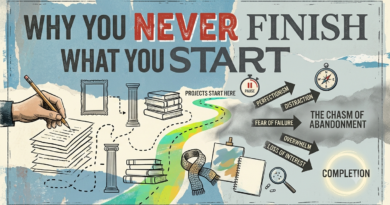

12 Neuroscience Facts About the Fear of Failure: What Your Brain Is Really Telling You
Failure is one of the most common fears people experience. Whether it’s a student worried about exams, an entrepreneur launching a business, or a professional pursuing a promotion, the possibility of failure can feel overwhelming.
But neuroscience suggests that fear of failure is not simply a personality trait or a lack of confidence. It is a complex response involving multiple brain systems that evolved to protect us from threats. Understanding how these systems work can help us manage fear more effectively and turn setbacks into opportunities for growth.
Why Does Failure Feel So Scary?
From an evolutionary perspective, rejection, uncertainty, and mistakes were often linked to survival. As a result, our brains developed mechanisms that treat potential failure as a threat.
The good news is that the brain is adaptable. Through conscious practice, we can reshape our responses to setbacks and build resilience.
Let’s explore 12 neuroscience-backed insights about the fear of failure.
1. Your Brain Has a Built-In Alarm System
When you face uncertainty or potential failure, the amygdala—often called the brain’s alarm center—becomes active. This activation triggers feelings of anxiety, fear, and caution.
What You Can Do
- View mistakes as feedback rather than personal flaws.
- Ask yourself what can be learned from the experience.
- Focus on improvement rather than judgment.
2. Small Wins Rewire the Brain
Success does not have to be massive to matter. Small achievements create positive neural pathways that strengthen confidence over time.
Practical Strategies
- Set manageable daily goals.
- Celebrate incremental progress.
- Track accomplishments in a journal.
These micro-successes gradually build a growth-oriented mindset.
3. The Brain Is Designed to Change
Neuroplasticity refers to the brain’s ability to reorganize and create new neural connections throughout life.
Failure is not a dead end—it is often a turning point for learning and adaptation.
Key Takeaways
- Every setback contains valuable information.
- Reflection strengthens future decision-making.
- Skills can be developed through practice and persistence.
4. Fear of Failure Is Often Fear of Rejection
The anterior cingulate cortex becomes active when we experience social rejection or anticipate negative evaluation from others.
Many people fear embarrassment more than failure itself.
Remember
- Most people are focused on their own lives and challenges.
- Temporary setbacks rarely define your reputation.
- Growth often requires taking visible risks.
Related Stories
Failure Avoidance Behavior: Why We Hold Ourselves Back and How to Break Free
5. Your Inner Coach Matters
The prefrontal cortex helps regulate emotions, make decisions, and override fear-based impulses.
A strong internal dialogue can significantly improve performance under pressure.
Strengthening Your Inner Coach
- Practice positive self-talk.
- Use visualization techniques.
- Keep a journal of achievements and lessons learned.
6. Stress Triggers Fight, Flight, or Freeze
When fear intensifies, the body releases stress hormones such as cortisol.
This response narrows attention and can reduce creative thinking.
How to Stay Grounded
- Practice mindfulness exercises.
- Use deep breathing techniques.
- Engage in regular physical activity.
Reducing stress allows the brain to access higher-level thinking.
7. Growth Happens Outside the Comfort Zone
Research suggests that optimal learning occurs when challenges are slightly beyond current abilities.
Too little challenge leads to boredom, while too much creates panic.
Find the Sweet Spot
- Take on manageable challenges.
- Gradually increase difficulty.
- Focus on learning rather than perfection.
8. Resilience Is a Trainable Skill
Resilient individuals recover more quickly from setbacks and maintain motivation despite obstacles.
Ways to Build Resilience
- Practice gratitude.
- Maintain supportive relationships.
- Focus on long-term goals rather than short-term disappointments.
9. Rumination Strengthens Self-Doubt
Dwelling repeatedly on mistakes activates brain networks associated with self-referential thinking and negative reflection.
The more we replay failures, the stronger those mental patterns become.
Break the Cycle
- Take action immediately after a setback.
- Exercise or move your body.
- Shift attention toward problem-solving.
Action often weakens the grip of rumination.
10. The Brain Responds to Imagined Threats
Interestingly, the brain often reacts similarly to imagined fears and real dangers.
This is why worrying about failure can feel physically exhausting even when nothing has happened.
Reframe Mental Imagery
- Visualize successful outcomes.
- Imagine overcoming challenges.
- Practice positive future thinking.
Mental rehearsal can improve confidence and performance.
11. Mirror Neurons Influence Motivation
Mirror neurons help us learn by observing others.
Watching people overcome challenges can strengthen our own belief in what is possible.
Surround Yourself With Growth
- Seek mentors and role models.
- Read success stories.
- Spend time with people who embrace learning and improvement.
Positive environments often accelerate personal growth.
Related Stories
10 Unconventional Rules of Discipline from Jordan Peterson That Will Transform Your Life
Childhood Roots of Fear of Failure: How Parenting Shapes Lifelong Achievement Anxiety
12. Self-Compassion Reduces Fear
Research shows that self-compassion can reduce activity in threat-detection systems while increasing motivation for positive change.
Contrary to popular belief, being kind to yourself does not make you complacent—it helps you recover faster.
Practice Self-Compassion
- Speak to yourself as you would a close friend.
- Accept mistakes as part of learning.
- Replace harsh criticism with constructive feedback.
Turning Fear Into Growth
Fear of failure is not evidence that you are incapable. It is evidence that your brain is trying to protect you from uncertainty.
The challenge is not eliminating fear entirely but learning how to respond to it wisely.
By understanding the neuroscience behind failure, you can:
- Build resilience
- Develop confidence
- Reduce self-doubt
- Improve emotional regulation
- Create a growth mindset
Every successful person has encountered failure. The difference is that they learned to interpret setbacks as information rather than identity.
The next time fear appears, remember: your brain is reacting to uncertainty, not predicting your future. Growth begins when you move forward anyway.
If you think this information is useful, you can…
Get updates and read additional stories on the Health Orbit Fan Page.
For Guest posts, sponsored posts and other details, please click the ‘Contact Us’ page.