
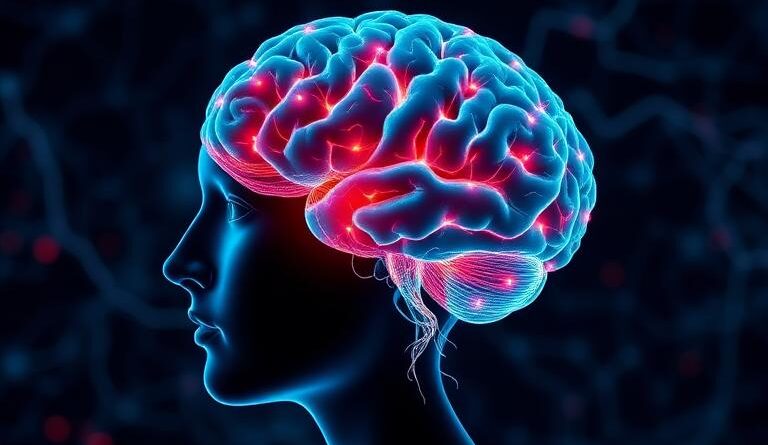
Rewiring the Aging Brain: How Targeted Therapies Are Harnessing Neuroplasticity to Combat Cognitive Decline
For decades, the prevailing belief was that the adult brain was hardwired—that after a certain age, we were destined to lose neurons and cognitive function with no way back. We now know this could not be further from the truth. The brain possesses a remarkable capacity for reorganization and adaptation throughout life, a property known as neuroplasticity.
Today, researchers are leveraging this lifelong adaptability to develop targeted cognitive training programs and therapies that not only slow normal age-related cognitive decline but also show promise in combating devastating neurodegenerative diseases like Alzheimer’s, Parkinson’s, and ALS. As one researcher put it, “leveraging neuroplasticity at any age can increase confidence, motivation, and the desire to tackle new challenges—factors that ultimately help individuals adapt to change and maintain independence longer.”
The Science of Neuroplasticity in Aging
Neuroplasticity refers to the brain’s lifelong ability to reorganize itself in response to experience, learning, and environmental changes. This involves significant reorganization of neural circuits—not just during development but throughout life.
Critically, the aging brain retains a “remarkable capacity for reorganization,” a phenomenon researchers call adaptive neuroplasticity. This adaptive capacity supports cognitive resilience—the ability to maintain efficient cognitive performance despite age-related neural vulnerability. In other words, neuroplasticity is a “modifiable readiness state” that can be supported by targeted interventions.
Related Stories
Failure Avoidance Behavior: Why We Hold Ourselves Back and How to Break Free
Cognitive Training: Rewiring the Healthy Aging Brain
Perhaps the most exciting development is the evidence that structured cognitive training can produce measurable, positive changes in the aging brain.
The INHANCE Trial: Reversing a Decade of Decline
The Improving Neurological Health in Aging via Neuroplasticity-based Computerized Exercise (INHANCE) trial, a double-blind randomized controlled trial conducted at McGill University, represents a landmark achievement. The study enrolled 92 healthy adults aged 65 and older who completed 35 hours of training over 10 weeks.
The results were striking. Using a specialized PET scan that makes cholinergic reserves visible, researchers found that the speed-based cognitive training group showed a 2.3% gain in cholinergic terminal density in the anterior cingulate cortex—a brain region vulnerable to age-related decline. This gain effectively offset the estimated 2.5% decline typically observed over a decade of natural aging.
Senior author Dr. Etienne de Villers-Sidani noted: “The training restored cholinergic health to levels typically seen in someone 10 years younger. This is the first time any intervention, drug or non-drug, has been shown to do that in humans”. The training enhanced cholinergic function, a chemical system that influences attention, memory, and decision-making.
MTT24.5: Systematic Cognitive Reserve Enhancement
Another promising approach is the Mental Training Tech 24.5 (MTT24.5) program, a structured 12-week intervention combining new knowledge acquisition with specific learning techniques. In a pilot randomized controlled trial with 76 participants (mean age 59), the intervention group showed a 5% increase in global cognitive scores, while the control group declined by 0.5 points. Memory domain improvements were even more dramatic—an 11.4% increase. Notably, participants with lower baseline cognitive scores showed greater improvements, suggesting those who need it most may benefit the most.
Working Memory Training and Beyond
Working memory training promotes more flexible use of cognitive resources in aging populations. Studies have shown that such training can induce long-lasting changes in cortical activation patterns. A meta-analysis of neuroimaging studies found that cognitive training supports cognitive improvements in older adults through increased activation of task-relevant and compensatory brain regions.
Beyond Normal Aging: Neurodegenerative Diseases
The implications extend far beyond healthy aging. Researchers are now applying similar principles to three of the most challenging neurodegenerative conditions.
Related Story
Neuroplasticity Workouts: 7 Exercises To Rewire Habits In 21 Days
Alzheimer’s Disease
Alzheimer’s disease involves particularly steep declines in cholinergic health. The same speed-based training that restored a decade of cholinergic decline in healthy older adults may offer a lower-risk alternative to medication or be used alongside it.
Beyond cognitive training, repetitive transcranial magnetic stimulation (rTMS) has shown remarkable promise. A 14-day rTMS intervention in early-stage Alzheimer’s patients significantly improved cognitive performance (measured by MMSE, MoCA, and RAVLT tests) and reduced neuropsychiatric symptoms. The treatment led to a 9.4% reduction in neurofilament light chain levels—a biomarker of neurodegeneration—and enhanced global brain network efficiency. Importantly, cognitive gains were significantly associated with network reorganization metrics, suggesting the brain is actively rewiring in response to stimulation.
Other emerging approaches include cortico-cortical paired associative stimulation to restore synaptic function, audiovisual gamma stimulation to clear amyloid-beta in animal models, and personalized digital cognitive rehabilitation currently being evaluated in clinical trials.
Parkinson’s Disease
Parkinson’s disease progressively impairs both motor and non-motor functions, with over 60% of patients developing cognitive decline and nearly half suffering from depression or anxiety. Dopaminergic medications show limited efficacy for these non-motor symptoms.
A network meta-analysis of 7 randomized controlled trials found that cognitive rehabilitation combined with non-invasive brain stimulation showed superior efficacy for cognitive improvement. Meanwhile, combined motor-cognitive rehabilitation excelled in improving emotional well-being.
A proof-of-concept study investigating intermittent theta-burst stimulation (iTBS) —a patterned rTMS protocol—as a priming strategy for action observation and imitation training found significant enhancements in dual-task gait automaticity and global cognition. Improvements in cortical plasticity were significantly correlated with better gait performance. The researchers concluded that iTBS can potentiate rehabilitation effects by enhancing cortical plasticity and motor learning.
Related Story
Impact of Constant AI Assistance on Cognition: How Relying on AI Is Reshaping Our Brains
Amyotrophic Lateral Sclerosis (ALS)
ALS, characterized by progressive loss of motor neurons with an average life expectancy of just 2–3 years, has historically received less attention in cognitive research. Yet a significant number of ALS patients experience cognitive impairment.
A double-blind, randomized, sham-controlled trial of 90 ALS patients with cognitive impairment found that 4 weeks of rTMS applied to the dorsolateral prefrontal cortex yielded short-term positive effects on cognitive function. The treatment also significantly reduced caregiver burden—a crucial quality-of-life metric. While no improvement was observed in disease severity, the cognitive benefits alone represent a meaningful advance.
Key Takeaways
- The aging brain remains plastic. Neuroplasticity persists into old age, and adaptive neuroplasticity supports cognitive resilience despite age-related neural vulnerability.
- Speed-based cognitive training can reverse a decade of decline. The INHANCE trial demonstrated a 2.3% gain in cholinergic function over 10 weeks, offsetting the typical 2.5% decline seen over 10 years of aging.
- Structured programs enhance cognitive reserve. The MTT24.5 program produced a 5% global cognitive improvement and 11.4% memory improvement in healthy adults.
- rTMS shows promise across multiple neurodegenerative diseases. In Alzheimer’s, it improved cognition and reduced neurodegeneration biomarkers. In Parkinson’s, it enhanced rehabilitation outcomes. In ALS, it improved cognitive function and reduced caregiver burden.
- Multidomain interventions may be most effective. Combining cognitive training, physical exercise, nutrition, and social engagement appears to induce neuroplasticity more effectively than any single approach.
- Lifestyle factors matter. Physical exercise, diet, intellectual engagement, and sleep all drive astroglial plasticity toward cognitive improvement.
Related Story
12 Neuroscience Facts About the Fear of Failure: What Your Brain Is Really Telling You
If you think this information is useful, you can…
Get updates and read additional stories on the Health Orbit Fan Page.
For Guest posts, sponsored posts and other details, please click the ‘Contact Us’ page.