
Yoga for Healthy Ageing: Can This Ancient Practice Slow the Aging Process?
Growing old is something that will happen to all of us. Still, the way we age can differ quite a bit between people. While a few people keep their bodies in motion and their minds alert for a long time, other individuals find it more difficult to get around, suffer from chronic diseases, and have problems with their memory. As a result, scientists, doctors, and fitness specialists have been looking for ways to encourage not only a longer life but also a healthier one.
Out of all lifestyle change options available these days, yoga is turning out to be one of the most efficient and easiest to do at home ways to keep the body, mind, and emotions balanced and well. Besides, current research backed by science is progressively showing that yoga may contribute to enhancing health span- the duration a person lives being healthy and active rather than merely expanding lifespan.
Understanding Healthy Ageing
Healthy ageing is not simply about living longer. It refers to maintaining functional ability, independence, cognitive health, and quality of life as we grow older.
According to the World Health Organization (WHO), healthy ageing involves developing and maintaining the functional abilities that enable well-being in older age. This includes:
- Maintaining physical mobility
- Preserving cognitive function
- Supporting emotional health
- Reducing the risk of chronic diseases
- Staying socially engaged
- Enhancing overall quality of life
Yoga addresses many of these aspects simultaneously, making it a holistic approach to ageing well.
Can Yoga Slow the Aging Process?
Although yoga cannot prevent the progression of time-related ageing, it will probably help slow down the biological processes of ageing to a large extent.
Chronic stress has been identified as one of the main factors leading to accelerated ageing. So, higher levels of stress hormones like cortisol are linked with increased inflammation, a weakened immune system, heart disease, and reduced brain function.
Yoga is a well-rounded workout that incorporates asanas, pranayama, and dhyana, which help normalize the body’s response to stress.
Potential anti-ageing benefits of yoga include:
- Reduced chronic inflammation
- Improved cardiovascular health
- Better hormonal balance
- Enhanced flexibility and mobility
- Improved sleep quality
- Reduced stress and anxiety
- Better brain function and memory
Several studies have also suggested that regular yoga practice may positively influence telomeres—the protective caps at the ends of chromosomes that shorten with age. Longer telomeres are associated with healthier ageing and reduced disease risk.
Related Story
Gentle Yoga for Older Women: Reclaiming Strength, Balance, and Serenity
Yoga and Longevity: What the Science Says
Longevity is influenced by numerous factors, including genetics, lifestyle, diet, sleep, and physical activity.
Yoga contributes to many of these factors through its comprehensive approach to wellness.
Researchers have found that yoga can help:
Improve Cardiovascular Health
Heart disease remains one of the leading causes of death worldwide.
Regular yoga practice may help:
- Lower blood pressure
- Improve circulation
- Reduce resting heart rate
- Improve heart rate variability
- Support healthy cholesterol levels
These benefits contribute significantly to long-term cardiovascular health.
Enhance Immune Function
Ageing often weakens immune responses, making older adults more susceptible to infections and illnesses.
Yoga has been associated with:
- Reduced inflammatory markers
- Improved immune cell activity
- Better stress management
Since chronic stress suppresses immunity, yoga’s calming effects may indirectly strengthen the body’s natural defense mechanisms.
Support Metabolic Health
Many age-related conditions are linked to metabolic dysfunction.
Yoga may help improve:
- Blood sugar regulation
- Insulin sensitivity
- Weight management
- Energy metabolism
These effects can lower the risk of conditions such as type 2 diabetes and obesity.
Related Story
Is Yoga A Good Replacement For Cardio Or Strength Training?
How Does Yoga Improve Health Span, Not Just Lifespan?
Modern medicine has become increasingly effective at extending life expectancy. However, living longer does not necessarily mean living healthier.
Health span focuses on the years of life spent in good health, free from major disease and disability.
Yoga supports health span by addressing multiple dimensions of wellness.
Physical Health
As people age, muscle mass, balance, flexibility, and bone density naturally decline.
Yoga helps maintain:
- Joint mobility
- Muscular strength
- Postural stability
- Functional movement
These benefits reduce the risk of falls and injuries, which are major concerns among older adults.
Mental Health
Ageing can be accompanied by anxiety, loneliness, depression, and stress.
Yoga encourages mindfulness and self-awareness, helping practitioners:
- Manage stress effectively
- Improve emotional resilience
- Enhance mood
- Foster a sense of purpose
Cognitive Health
Brain health has become a major focus of healthy ageing research.
Studies suggest yoga may support:
- Memory
- Attention
- Processing speed
- Executive function
Meditation and breathing exercises may also promote neuroplasticity—the brain’s ability to form new neural connections throughout life.
Best Yoga Poses for Seniors
Older adults should always consult a healthcare provider before beginning any new exercise program. Once cleared, gentle yoga can provide significant benefits.
Here are some beginner-friendly poses commonly recommended for seniors.
1. Mountain Pose (Tadasana)
This foundational standing pose improves posture and balance.
Benefits:
- Strengthens leg muscles
- Enhances body awareness
- Improves alignment
- Supports stability
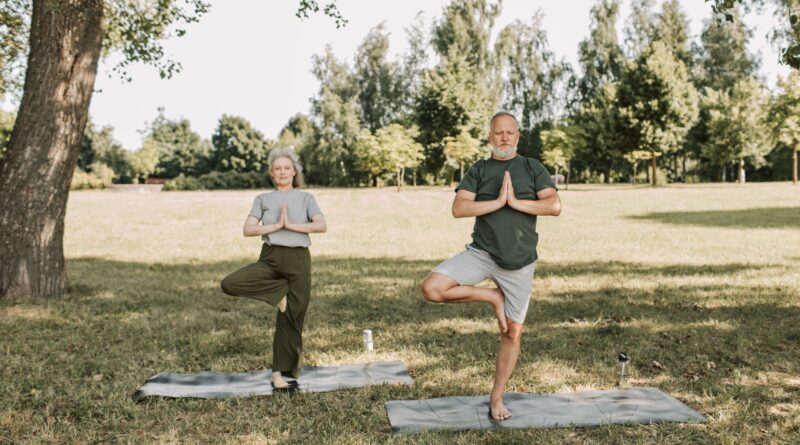
2. Tree Pose (Vrikshasana)
Tree Pose challenges balance and coordination.
Benefits:
- Improves concentration
- Strengthens lower body muscles
- Enhances balance
- Supports fall prevention
Modification:
Use a chair or wall for support if needed.
3. Cat-Cow Stretch (Marjaryasana-Bitilasana)
This gentle movement improves spinal mobility.
Benefits:
- Reduces back stiffness
- Enhances flexibility
- Promotes circulation
- Encourages healthy posture
4. Seated Forward Bend
A gentle seated variation can be highly beneficial.
Benefits:
- Stretches the hamstrings
- Relieves lower back tension
- Encourages relaxation
- Improves flexibility
5. Chair Yoga Variations
Chair yoga provides many traditional yoga benefits while minimizing fall risk.
Benefits:
- Accessible for individuals with mobility limitations
- Improves strength and flexibility
- Supports joint health
- Builds confidence
Yoga and Brain Health
One of the most exciting areas of research involves yoga’s potential effects on the ageing brain.
Scientists have observed that regular yoga practice may influence:
- Memory retention
- Attention span
- Emotional regulation
- Stress resilience
- Cognitive flexibility
Meditation and mindful movement stimulate brain regions involved in learning and memory while reducing activity in areas associated with chronic stress.
Emerging research also suggests that yoga may help reduce risk factors associated with neurodegenerative conditions such as Alzheimer’s disease and Parkinson’s disease.
Although more studies are needed, the early findings are encouraging.
Creating a Sustainable Yoga Practice for Healthy Ageing
The key to gaining long-term benefits from yoga is consistency rather than intensity.
Older adults do not need advanced poses or lengthy sessions to experience meaningful improvements.
Simple guidelines include:
- Start with 10–20 minutes daily
- Focus on gentle movements
- Prioritize proper breathing
- Use supportive props when necessary
- Practice mindfulness regularly
- Listen to your body’s limitations
Even a modest yoga routine performed consistently can yield significant physical and mental health benefits over time.
Disclaimer
The information provided in this article is intended for educational and informational purposes only and should not be considered medical advice. Always consult your physician, healthcare provider, or a qualified fitness professional before beginning any new exercise or yoga program, especially if you have a medical condition, injury, balance issues, or mobility limitations.
Practice all yoga poses within your comfort level and stop immediately if you experience pain, dizziness, shortness of breath, or discomfort. The creators of this video are not responsible for any injuries, losses, or damages that may result from the use of the information presented.
By participating in these exercises, you acknowledge that you do so at your own risk and responsibility.
If you think this information is useful, you can…
Get updates and read additional stories on the Health Orbit Fan Page.
For Guest posts, sponsored posts and other details, please click the ‘Contact Us’ page.